March, 2026
Kāpehu Marae – protecting the whenua at Arapohue
The vision of teaming up with Kaipara Moana Remediation is already paying dividends for Kāpehu Marae Trust and Ngā repo o te Wairoa.
In a short space of time, almost 8000 native grasses and trees – with support from Trees That Count – have been planted within a significant kahikatea and raupō wetland almost 40-hectares in total and which is overlooked by Kāpehu Marae.
And it is driving the traditional custodians of the whenua to do more to restore the health and mauri of a significant wetland at Arapohue, south of Dargaville, which is home to unique native species.
So far, a mix of harakeke, tī kōuka, kahikatea, kānuka, mānuka, grasses and sedges have been planted in two areas totalling almost seven-hectares and in between already established kahikatea forests (which already include healthy stands of tī kōuka, nīkau and other natives).
Grace Le Gros, one of the project leaders, says the mahi started with a dream in 2024 and quickly progressed into action thanks to buy-in and combined mahi from whānau.
Important to the success of the project is keeping cattle out of the wetland area after decades of grazing.
She says as wetlands are a cultural treasure and water is the life giver of all things, wetlands are important taonga to Māori.
“As well as kai, wetlands provide building and weaving materials like kuta, raupō and harakeke,” says Grace.
“They provide medicines, and dyes used for seasoning timber and restoring/preserving precious artefacts.”
In fact, Grace believes wetlands are among the most productive places on earth, providing an enormous food source for people, fish, birds and other animals.
“Wetland animals, especially tuna, are important to Māori, as they’re valuable mahinga kai,” she says.
They are sentiments shared by Raiha Bradley who lives on the whenua and Kelly Retimana – another driving force behind the project at Kāpehu.
Raiha says it is important for her whānau to be strongly connected to the whenua.
“There is an old saying that if you look after the whenua, the whenua will look after you. Our mokopuna are our leaders for tomorrow so it is important we look after the land,” says Raiha.
For Kelly, seeing whānau engage with the KMR kaupapa is the perfect setting for a springboard to other opportunities to protect and enhance the whenua – while also creating a template to replicate on other areas of whenua within the Kaipara Moana catchment.
“If you know land is going to be around for generations to come, then I encourage people to get on board with Kaipara Moana Remediation and make a difference. What we are doing will allow whānau in future generations to sit in the shade of the trees we plant and protect,” says Kelly.
Grace and Kelly are driven to help the KMR kaupapa and long-term aim of halving the sediment flowing into local waterways and the Kaipara Moana. They are also keen to take on future projects to protect treasured whenua as everyone benefits when precious soils remain on the land where they belong.
KMR continues to invest in projects to restore wetlands, fence off rivers and streams, and plant trees or regenerate forest on erosion-prone land across many parts of Northland and Auckland.
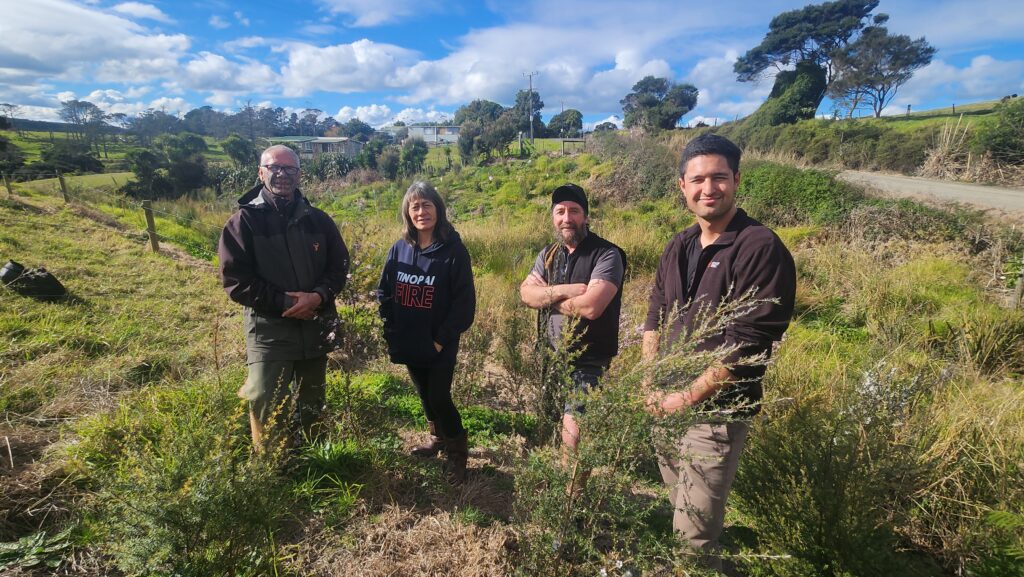
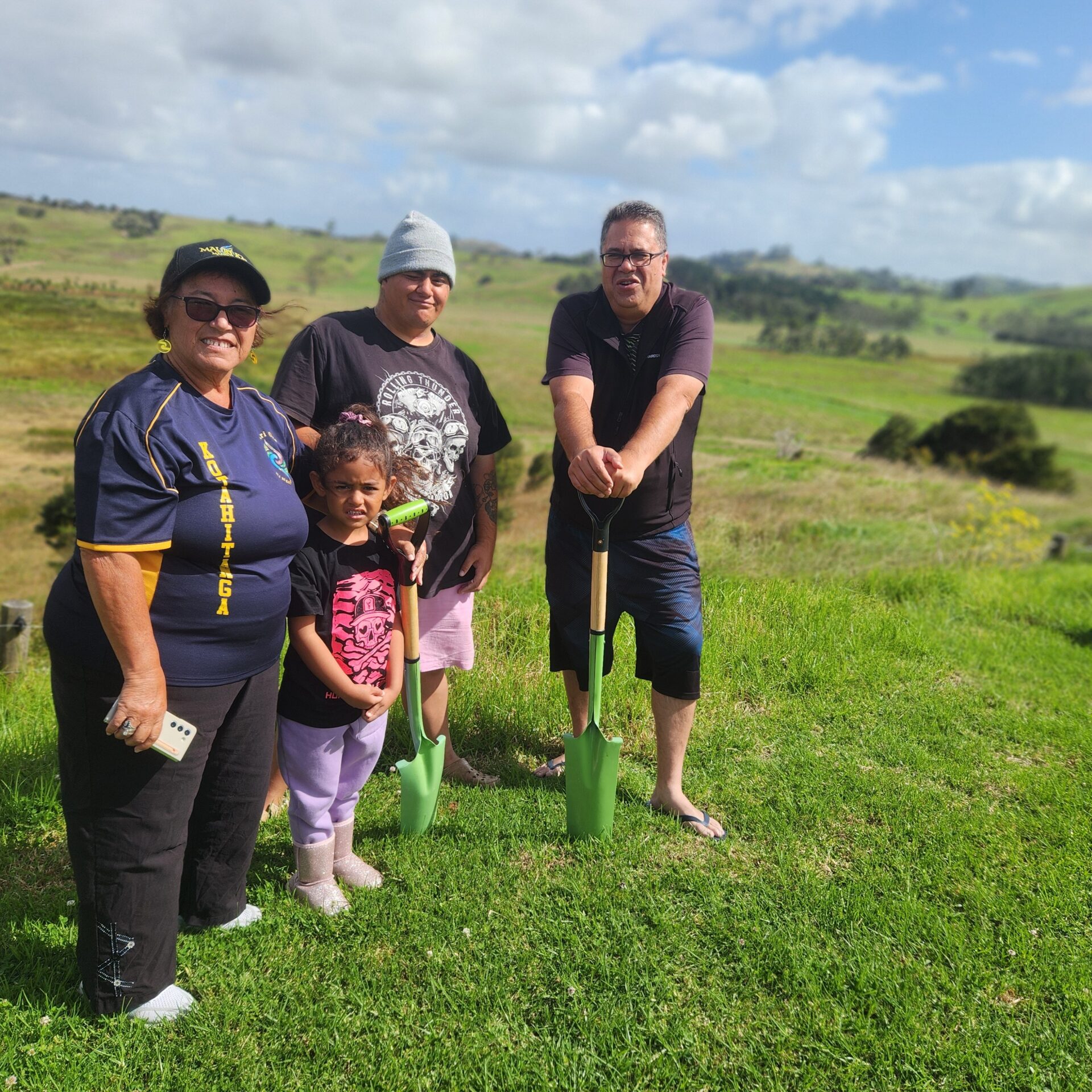
Image: Grace Le Gros, left, Raiha Bradley, second right, with Kelly Retimana, who all believe strongly in the KMR kaupapa.
Latest News
Latest News and Events
Kaurihohore School joins fast growing Kaipara Moana restoration efforts