February, 2026
The people behind KMR – Wayne and Melinda Birt
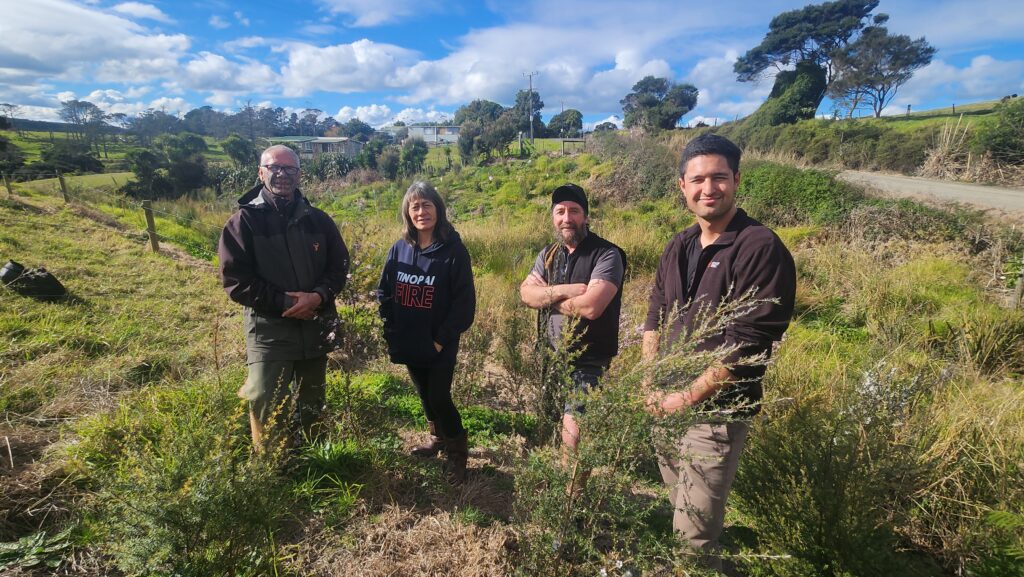
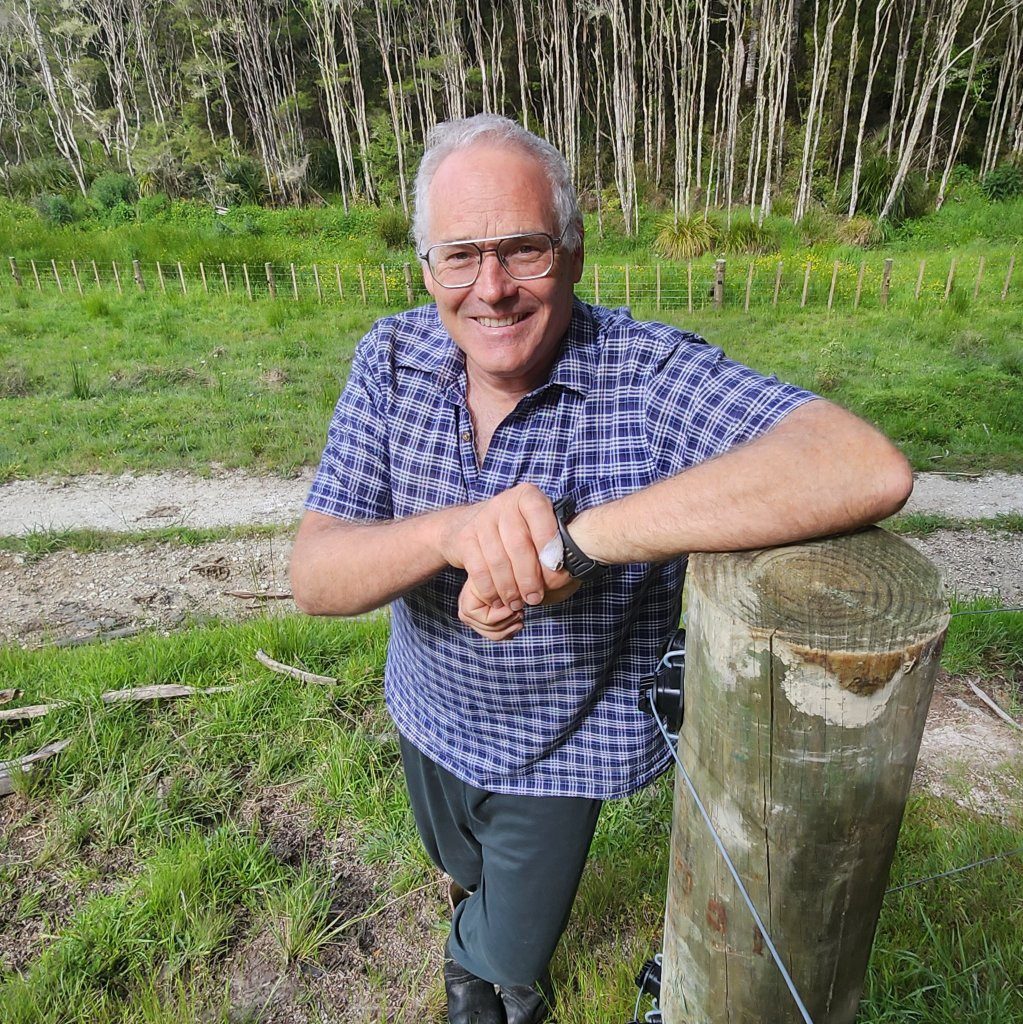
Since teaming up with Kaipara Moana Remediation, Paparoa farmers Wayne and Melinda Birt say their land is appreciating not having stock damaging waterways and bush areas.
So far, the couple are underway with four KMR funded projects with a strong focus on protecting large areas of native bush, highly erodible hillsides, springs, waterways and wetlands. Almost 12.5km of fencing has been completed to prepare areas for native planting.
“Streams were cleaned before fencing to provide good flow channels. The stream margins have good ground cover now, and the water generally flows clear. The bush areas are now developing a dense understorey,” say the couple.
The traditionally 240-hectare sheep and beef farm is fast moving to a beef-only unit, with around 300 breeding and finishing Angus cattle grazing alongside 70 sheep. The bulk of the land is leased from Wayne’s parents – Derek and Lynette Birt – with the property held by earlier generations of the family dating back to the 1880’s – some blocks being joined to the farm in later times.
Wayne and Melinda say the transition the farm has undergone could not have happened without KMR support and funding.
“KMR provides a funding source to help with the capital inputs required. The works simply would not have been achievable without it. KMR works with the landowner and really listen to the local knowledge available.
“There is a good source of knowledge available from KMR, and great work is done through working well together as a team. KMR are flexible and allowed us to pivot what we had agreed to do in order to respond to the resulting changes (and challenges) in priorities following extreme weather events. Parts of the farm suffered severe damage after receiving 181mm of rain in late January 2023, during ex-tropical cyclone Hale, followed by 350mm in early February 2023 during Cyclone Gabrielle.”
Wayne says around 30ha is fenced off indigenous forest, about 6ha is fenced off wetlands, with all the main streams now fenced.
“We are proud to be involved with KMR, to be just a small part in this very big and ambitious project.”
Wayne and Melinda believe the key to collaborating and problem-solving to restore the health and mauri of the Kaipara Moana is effective communication in both conveying and listening. Having good quality information is important too.
“We have just tried to use what KMR has on offer to better the farm. People have helped us along the way. In our development journey we have spent hundreds of thousands of dollars, which will have circulated back into our Northland community. Without the spark from KMR, it is quite possible we would still be at the start line.
“But KMR involves very good people. It is not dictatorial, but is a team player, and has been a great facilitator. I encourage people to get on board with KMR and do whatever level you can fund. It can transform your farming operation, your property – and the fishing in the harbour!”
Wayne says as the whole farm is being developed, an open mind is being kept as to how much of the land is to ultimately be fenced off and protected.
“The easier country has now pretty much been done, but the steeper land still requires some work, and we are still considering how this will best be done. The flexible support that KMR can provide allows us to take a considered approach over a period of time.
“Having the farm sufficiently developed will mean that the land can be farmed in a more environmentally friendly way. There have always been bush and trees on the farm. But we are now set up to better protect the land and the environment. Vulnerable areas are protected and areas that can be better farmed, can then be safely intensified,” says Wayne.
“The goal is essentially to continue to farm with an awareness of the physical land systems and respond to threats to the land. Examples might include identification of land slippages and creation of soil reinforcement using appropriately placed trees, which could then be managed for timber, soil conservation, and aesthetics, or to create attenuation dams in locations which might be reasonably wet in order to keep stock off sensitive areas and yet give those areas a very important purpose to take the top off the bell curve of the downstream flood,” the couple say.
“We think that the Kaipara Harbour will naturally heal and water quality should continue to improve. I think this will be a long game. Following generations will still need to put in the mahi. It cannot be just created in our generation and then left as job done.”
Latest News
Latest News and Events
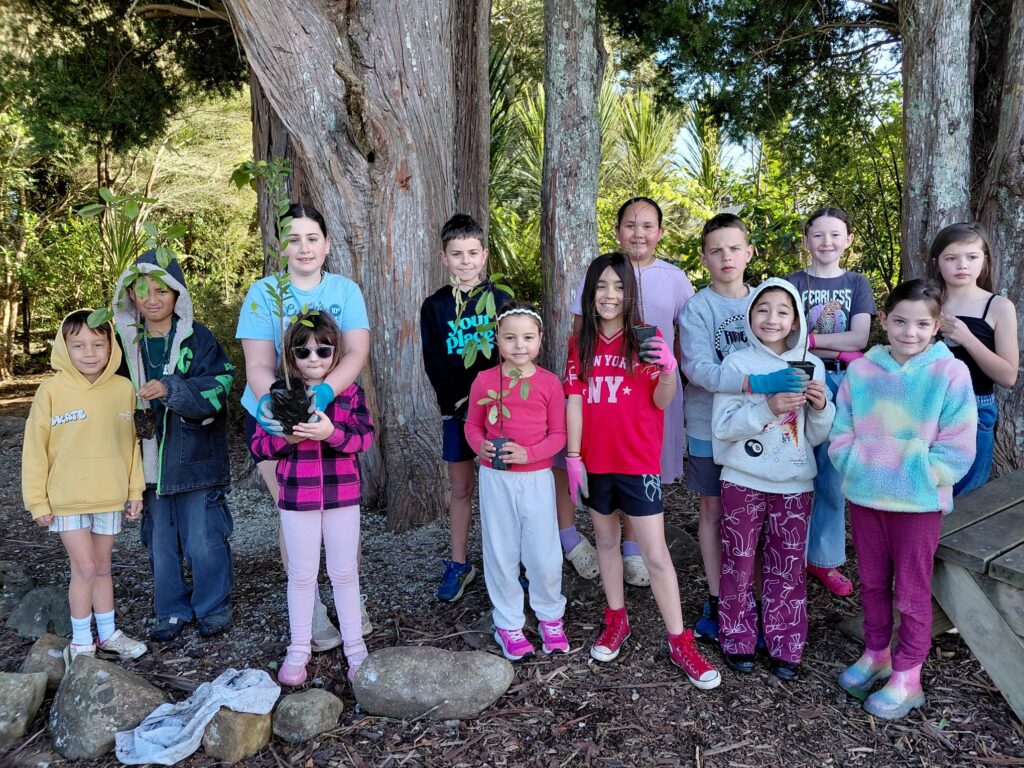
Kaurihohore School joins fast growing Kaipara Moana restoration efforts