August, 2026
KMR and Fonterra environmental collaboration supports well over 100 dairy farmers
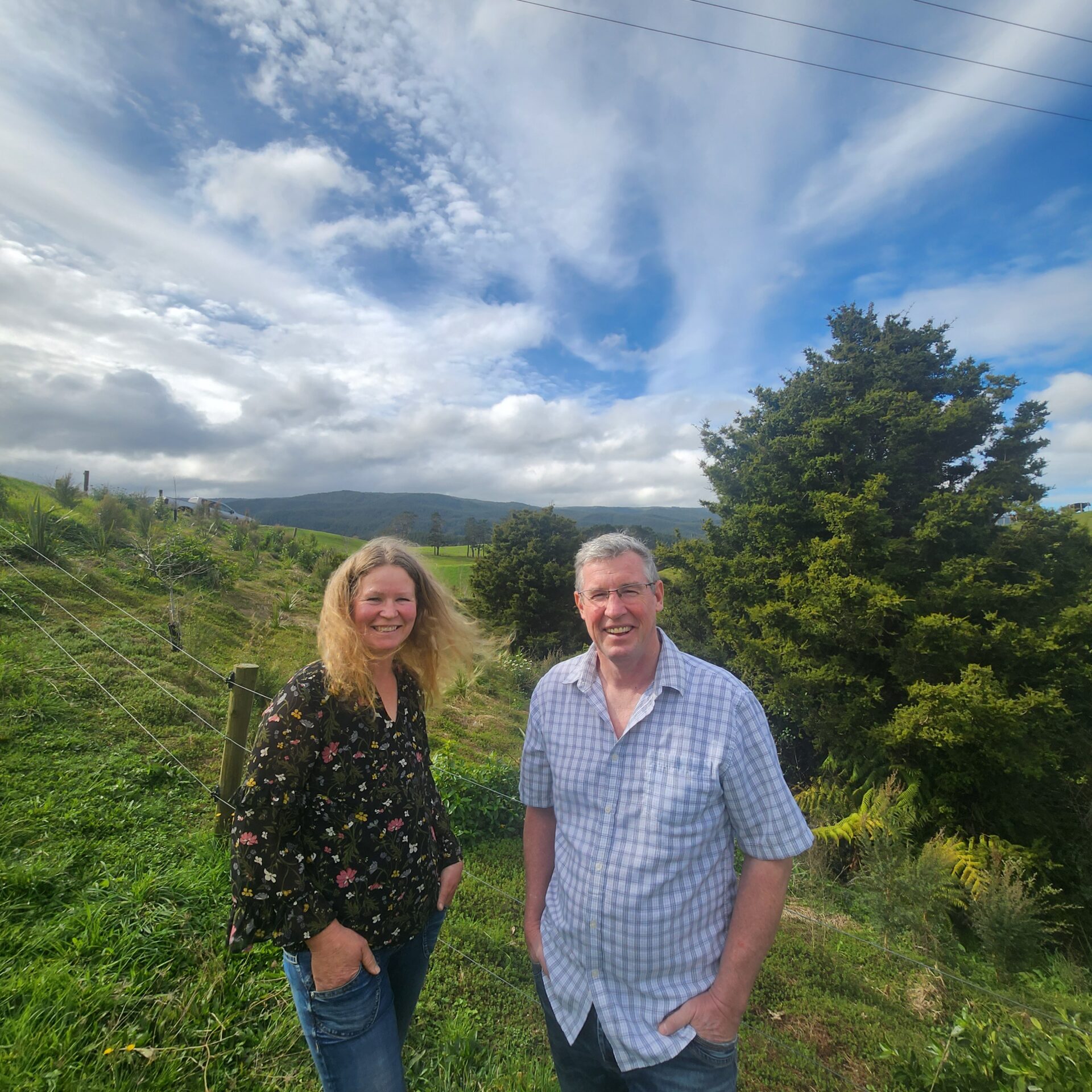
Two Northland dairy farmers benefitting from collaboration between Kaipara Moana Remediation and Fonterra say the collaboration has put them years ahead in their environmental endeavours.
With KMR funding 50% of fencing and plant costs, Fonterra has assisted with almost 250 KMR funding applications in recent years which has assisted 149 separate farms across the Northland and Auckland catchments of the Kaipara Moana.
KMR’s Acting Pou Tātaki Emma Doré says the efforts highlight the importance of working closely with partners to support the environmental efforts of farmers in the Auckland and Northland catchments of Kaipara Moana.
“Everyone benefits when our precious soils remain on the land where they belong. Our long-term goal is to halve the sediment flowing into local waterways and Kaipara Moana,” says Emma.
KMR is a decade-long collaboration to protect and restore the mauri of the Kaipara Moana. Across many parts of Northland and Auckland, KMR has invested in hundreds of projects to restore wetlands, fence off rivers and streams, and plant trees or regenerate forest on erosion-prone land.
Emma says the collaboration with Fonterra can help farmers meet environmental standards and increase resilience to extreme weather.
Northland-based Fonterra Sustainable Dairy Specialist Helen Moodie says the co-operative has long recognised the importance of environmental stewardship.
“What excites me most about partnering with KMR is the additional support it brings to protecting smaller streams, and the potential to use the KMR funding to protect more areas within farms,” says Helen.
“Partnering with KMR is a great opportunity to use Fonterra’s relationships with farmers throughout the Auckland and Northland catchments of the Kaipara Moana to build on environmental outcomes.
“To date, we’ve supported around 248 KMR funding applications, putting around 202,000 plants in the ground and completing more than 350 kilometres of fencing to protect waterways and wetlands.
“I love watching the farmers taking on this kind of work and seeing them recognised and supported every step of the way.”
Titoki farmers John and Jenny Waterhouse have embraced the KMR kaupapa with the support of Fonterra by planting an additional 5,750 native plants within the fencing of 1.4 km of waterways, wetlands and drains across 1.2 hectares within their 211 ha dairying operation.
The couple have personally been on a planting journey since 2000 and including the KMR activity have protected around 30 ha with 18.5 km of fencing.
Although they have already protected and planted numerous blocks over the years, the couple have earmarked another six blocks for protection and say this will happen with the support of their sharemilker Johan Guitry.
“Our farm is quite unique as it is at the end of a peninsula and bordered by the Wairua River on one side and the Mangakāhia River on the other. The two rivers converge at the end of our property and form the Wairoa River which flows into the Kaipara,” observe John and Jenny.
We are very proud to be part of a proactive movement and make a difference to our environment. We can all make a difference by working together, with the support of enthusiastic, proactive help from KMR and Fonterra.
Our family love this land. They have been part of every planting day. Now the grandchildren particularly have great pride in seeing how their trees have grown. As we walk amongst the plantings, they like to identify what tree they planted,” the couple say.
Donnellys Crossing dairy farmers Greg and Claire Collins are another couple who have long invested in protecting waterways, so embraced the chance to link with KMR to work on their 80 ha property.
So far, they have completed 1.8 km of fencing to protect 1.16 ha of unproductive land within which 4,450 native plants are now thriving thanks to the dedication, support and guidance of the KMR/Fonterra collaboration. A further 3 km of fencing has been completed over the years to protect 17 ha of farmland (including existing native bush).
“It is very much a stewardship thing. We are very much caretakers of the land. We want to leave our slice of paradise in better shape than we found it. Dairy farming and environmental care don’t have to be mutually exclusive,” say Greg and Claire.
Even on their boundary they are monitoring water quality on the Mangatū River, along with another gully further inland which is flourishing with fish life.
The couple are like so many fellow farmers who have an absolute focus on appropriate land use. Yet despite retiring pastural land, farm profitability has continually increased year on year because they are farming the most productive areas and not wasting time and fertiliser on low producing areas.
“When we started doing this our dairy farming mates thought we were mad because we fenced off three mouthfuls of grass! But we do it for two sound reasons, environmental and ease of stock and farm management. Doing these things is how we earn and keep the trust of our communities. Even if you are doing a little bit at a time, you are making a difference.”
Latest News
Latest News and Events
Kaurihohore School joins fast growing Kaipara Moana restoration efforts