July, 2026
Horticulture New Zealand and KMR progressing programme for Northland growers
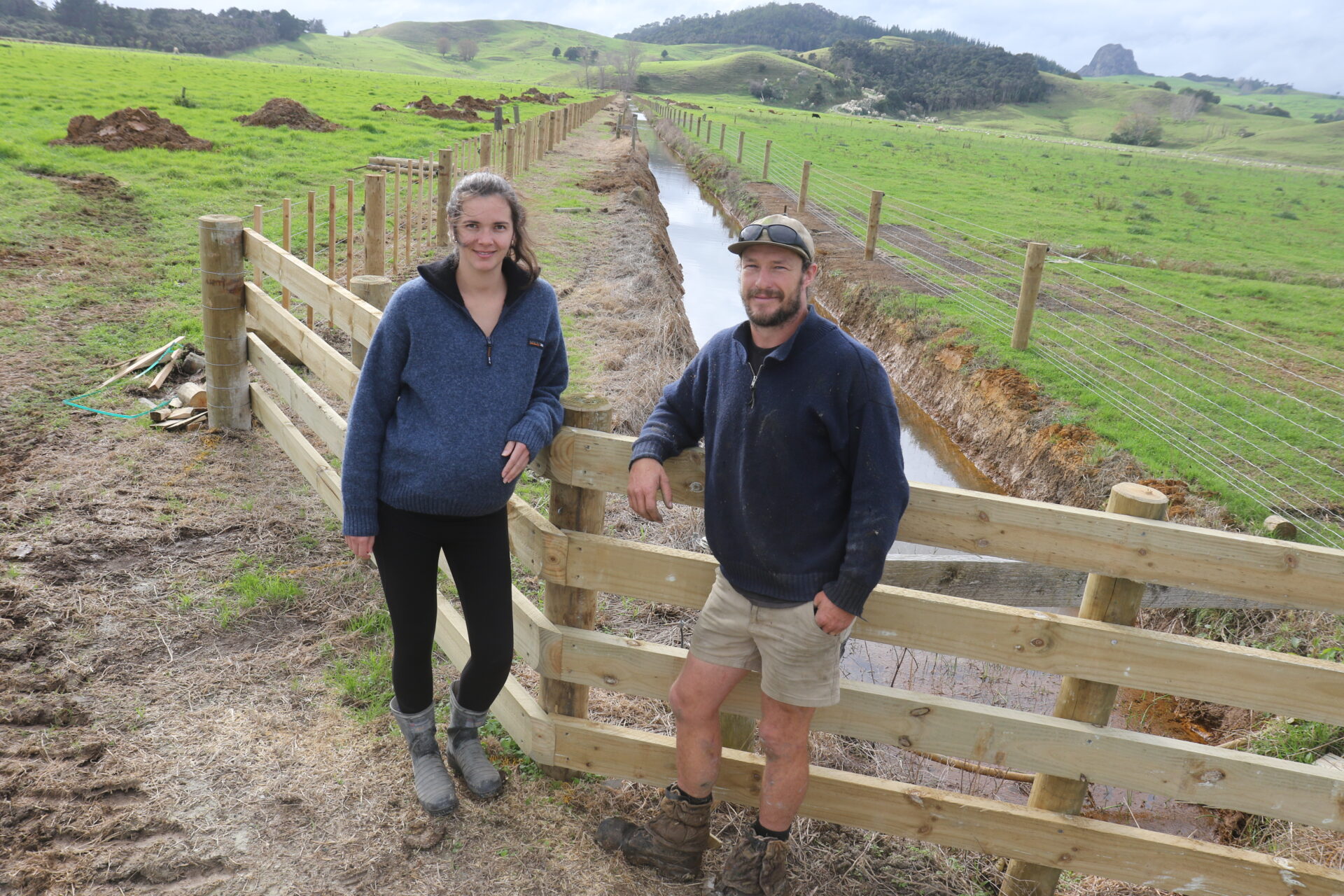
Image caption: Sophia Wood and Michael Frood on their Arapohue property.
A collaboration with Northland’s horticulture sector is paying dividends for growers.
Thanks to a partnership launched in 2025 between Kaipara Moana Remediation (KMR) and Horticulture New Zealand (HortNZ) to build resilience across the Northland/Te Tai Tokerau fruit and vegetable growers’ industry, environmental efforts are ramping up amongst Kaipara farmers.
Arapohue’s Sophia Wood and Michael Frood are in the midst of making positive environmental change to their farming operation – Double O Farms – with the help of KMR funding and the HortNZ Growing Change project.
Stage one was completed in winter 2025 – with two kilometres of waterways fenced off to protect the planting of 1,682 natives.
Stage two is well underway with 3km of waterway fencing just completed in preparation for just under 3,000 natives to be planted in July 2026.
“The waterways all feed directly into the Northern Wairoa River and our aim is to ultimately exclude all livestock from waterways and reduce sediment loss. We want healthy water, healthy soil and sustainable farming of the land,” says Sophia.
“It is great to do our bit to look after the harbour that we have grown up alongside. We are one of many farmers on the river’s edge that are in a position to directly improve land and water quality via the KMR project. Hopefully, other landowners will jump on board after seeing what we have been able to achieve,” say Sophia and Michael.
They say their 200-hectare family-owned property runs as a family share operation, where the couple crop 30ha of kūmara annually on a rotation, while Sophia’s sister Hazel and brother-in-law Alan fatten around 1,500 lambs through the winter. The remaining land is utilised by Sophia and Hazel’s parents Jeff and Catherine for beef breeding and finishing.
“The support of KMR and HortNZ has enabled us to accelerate our goals – both environmentally and economically – and focus on what the land could look like in ten years’ time.”
Across the river and half-way down the Pouto Peninsula is kūmara grower Luke Posthuma who crops 30-ha of kūmara and 5-ha of pumpkin on an 89-ha mixed cropping (500 lambs are wintered annually) unit which is comprised of 50ha of flats and 39ha of Te Kōpuru pan.
He too is on board with the KMR/Hort NZ partnership and is also appreciative of the support and guidance which is adding value to the business he runs in partnership with his Auckland-based parents.
Having studied Agricultural Science at Massey University and spent a decade immersed in environmental work and soil mapping, Luke says it is great putting that experience into practice on the land.
After a dry first year on the property and Cyclone Gabrielle in the second season, Luke says he appreciates the support of KMR and Hort NZ while he plays his part in reducing sediment flowing from his property to the Kaipara Moana.
So far 2.5 km of fencing around 2ha of land has been completed the past two years. When the project is complete there will be 15,775 native stems, with around half being utilised as ‘vegetated buffers’ on cropping land and the rest in areas too wet for cropping.
The funding from KMR and Hort NZ has fast-tracked our plans to protect waterways and retire areas of wetlands and mud springs which were wet areas of the farm causing management issues and not offering much in terms of productivity. In 20 years, the wetlands are going to be beautiful.
“The next part of the plan is to plant both sides of a stream that runs up a gully through the back of the farm.
“We want to reduce soil going into the drains while also providing good wintering spaces for insects, increasing the beneficial insects on the farm so that we can use less insecticides on our crops.
“We are looking at the long-term wellbeing of the landscape we live in and being custodians of the land – to leave it in a better shape than when we started farming it,” says Luke.
“Increased native plantings is going to improve the water quality in our streams and the harbour. We need to remember water quality is more than just clarity. So having the tributaries protected increases the insects, fish and birds living around the water margins,” says Luke.
In collaboration with KMR, HortNZ remains committed to supporting growers to enhance on-farm practices and biodiversity and contribute towards sustainable environmental outcomes.
KMR says the project supports the restoration of the Kaipara Moana and promotes horticulture best management practices to help increase resilience to future climatic events like floods, cyclones and storms, increase environmental stewardship and improve social cohesion and resilience across participating rural communities.
To get on board with KMR and get plans underway for your summer fencing project head to kmr.org.nz or contact hono@kmr.org.nz.
Latest News
Latest News and Events
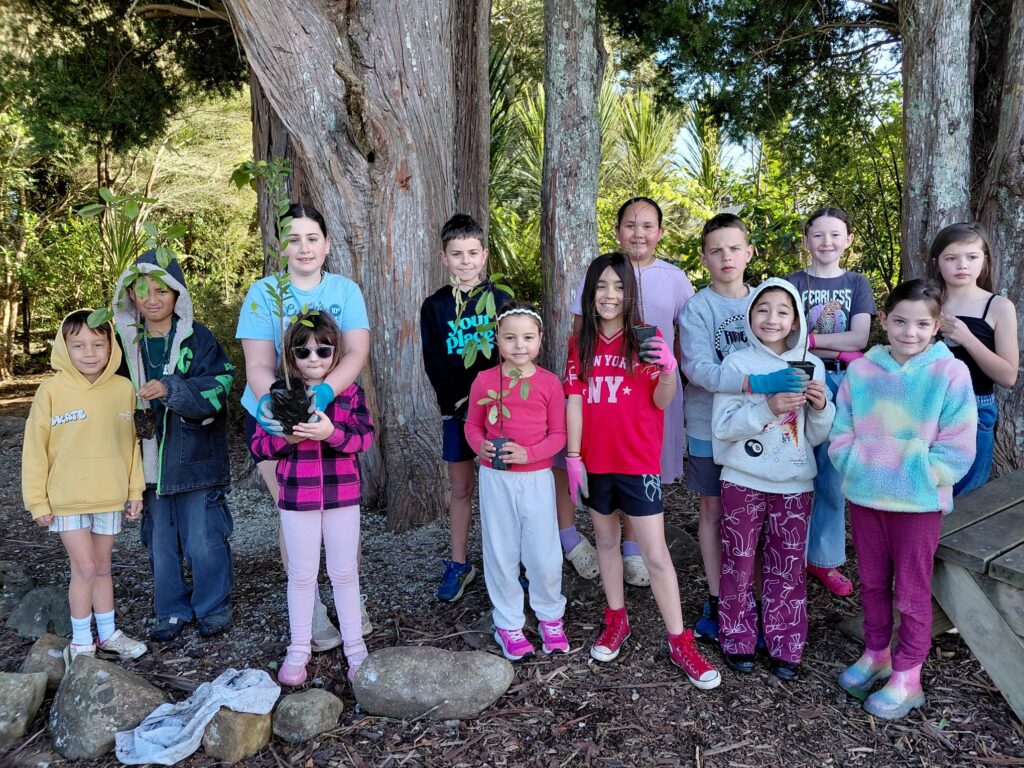
Kaurihohore School joins fast growing Kaipara Moana restoration efforts