
October, 2025
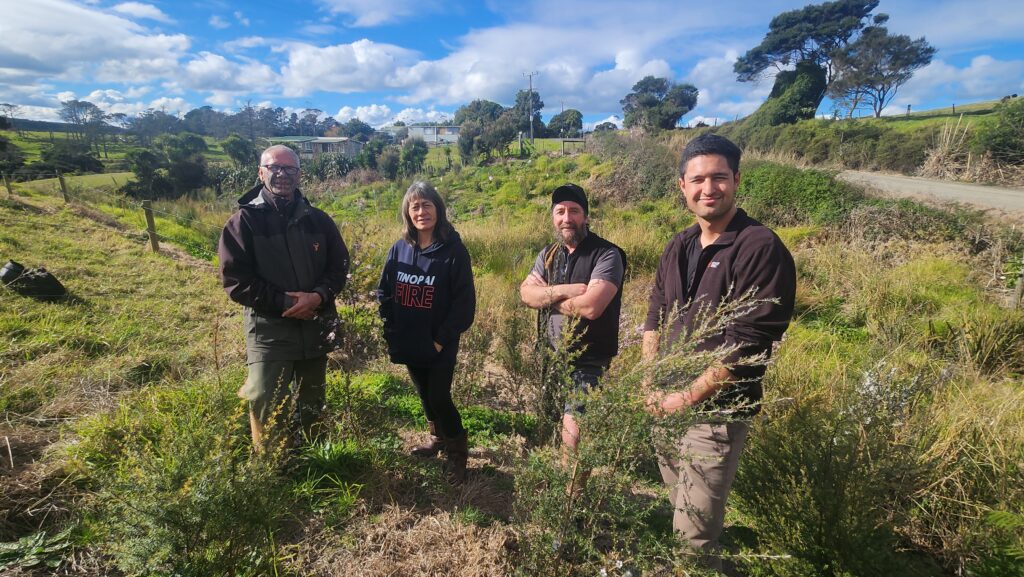
Nilsson family working with Hort NZ and KMR
Like so many growers, the Nilsson family recognise the importance of looking after their biggest investment – the environment and the land.
They have embraced the opportunity presented by Kaipara Moana Remediation (KMR) and have recently had 30,000 natives planted on their 285-hectare Dargaville kūmara and dairy unit.
Josh Nilsson says he and his parents – Grant and Tracey – found out about KMR through Horticulture New Zealand (HortNZ).
Following a highly successful pilot in early 2025, HortNZ and KMR are continuing their collaboration through into 2026.
“While the initial collaboration focused on supporting kūmara growers in Northland who had been adversely affected by the 2023 cyclones, this new collaboration includes both Northland and Auckland growers, and has broadened to also include tree crops, berries and leafy greens” says KMR Pou Tātaki Justine Daw.
HortNZ and KMR are now inviting expressions of interest from GAP-compliant levy-paying growers in the Kaipara Moana catchment across both Auckland and Northland regions. Through the collaboration, participating growers will be supported with fencing, native planting and wetland protection.
So far, the Nilssons have completed 1.2km of fencing and planted a 600-metre stretch of drainage – which borders their main kūmara growing area – a small nearby paddock with mud springs and existing mānuka, plus a substantial area of wetland which alone comprises the vast majority of the entire four hectares of land planted in natives.
The wetland itself is home to a healthy population of the rare matuku-hūrepo (bittern) and there is also plenty more birdsong around the farm thanks to kererū, tui and more.
Josh says they have always enjoyed having the native birds around and are looking forward to the population growing as their new habitat flourishes now it is fenced off from grazing.
Species planted so far include a classic revegetation mix of mānuka, purei, pukio, tī kōuka, harakeke, kahikatea, raupō, alongside akeake, tōtara, karo and taupata and a mixture of shrubs.
“It’s nice having these pockets of natives in the ground and it has got us thinking about what other areas of the farm could benefit from more planting,” says Josh.
“If the land is not being used to its potential it makes sense to put in natives. As they grow, these plants will provide more shade for the water in summer and keep it cool – we don’t have big flow creeks on the property and the water can heat up fast.”
The Nilssons are trying to adopt to a relatively new management regime of foliage buffers and biocontrol plantings for their longstanding kūmara cropping operation.
They are keen to do more native planting and form crop foliage buffers along waterways and drains that ultimately feed into the Mangatara Stream and then on to the Kaihū River.
Importantly, the native planting also supports drain stabilisation to help reduce erosion along stream and drain banks, as well as possible floodplain erosion in areas with recent alluvial soils, such as Kaipara clay and clay loam.
Creating drainage planting strips, similar to riparian planting margins, is a key method for controlling sediment in horticultural landscapes. This approach aligns with KMR’s goals by intercepting runoff, stabilising soils, and reducing sediment loss at its source.
The native plantings help slow and disperse runoff, allowing sediment to settle before it reaches waterways, thus preventing further harm to freshwater and estuarine ecosystems.
The benefits of using diverse native species for drain riparian margins planting go beyond erosion control.
Justine acknowledges that the Nilssons are an example for other growers.
“Native buffers create habitats for birds and insects that help control kūmara pests as part of an integrated management plan. They also offer shade and wind protection for crops, workers, and livestock, contributing to a more resilient and productive environment,” she says.
Josh adds: “The shaded areas also inhibit the growth of invasive weeds, reducing the need for herbicides and long-term maintenance efforts on farm. I’d encourage other growers to reach out to local regional representative for the Upper North Island, Arjune Dahya (arjune.dahya@hortnz.co.nz), or directly to KMR and give it a go.”
To get started on your project apply today.
Latest News
Latest News and Events
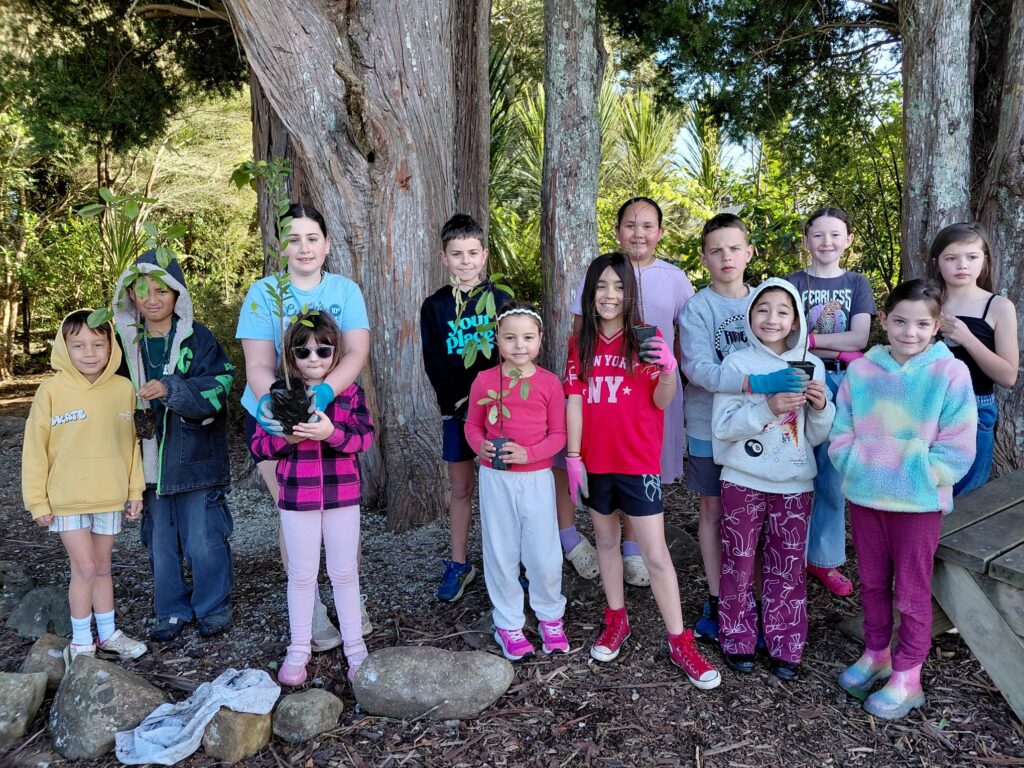
Kaurihohore School joins fast growing Kaipara Moana restoration efforts